

Looking Back - August 2026
By Leo Billington
Two stories from Morwell’s heydeys
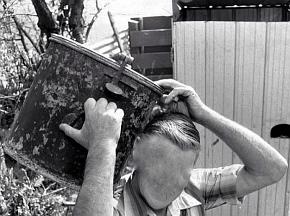
Perhaps not an appropriate topic with which to start, nonetheless, disposing of night soil was a constant bother annoying Morwell’s residents back in the day.
It was reported, there were accusations night soil was being buried in the Roger and Madden Streets area (Morwell Advertiser, September 29, 1949). The Shire Engineer, Mr F A Horsfall in 1940 had investigated possibilities of a sewerage scheme. He actually made preliminary estimates and prepared contour plans. There the matter rested for several years until an accurate costing was agreed.
Morwell Waterworks Trust was formed in September 1912 to address a need for regular flows of water. During 1909, there was debate about clay pipes, as used by the Melbourne Metropolitan Board of Works being effective for a local sewerage scheme. After all, Morwell had a pottery making bricks using quality grade clay, but no.
Many years later, in 1937, disposal of sewerage was becoming an urgent matter. Morwell Shire Council talked about it again, concluding a sewerage authority must be established relatively soon, within six months of approval from the (State) Government in Council. The proviso was State Government funding would be required. Nothing happened.
A break-through came along in October 1938 when the Morwell Waterworks Trust agreed to act as the Sewerage Authority for Morwell. Unbelievably however, 95 Morwell residents protested against this, demanding a poll before any sewerage scheme was adopted. With some humour, the Morwell Advertiser (Thursday November 14, 1940) headlined the November monthly meeting of the Morwell Sewerage Board as a “monthly pow-wow”.
Eventually a Treatment Works and Disposal Area had to be identified. An early option was somewhere in the Brinsmead Estate. Another was adjoining the Hazelwood Cemetery, perhaps a bit far from town, and not a good look. Somewhere “at Morwell’s southern boundary, such as out the Thorpdale Road” was another option canvassed in Council’s discussions with the Sewerage Board.
How ironical to step through even a brief history outlining provision of a sewerage scheme when we read what was published in October 1940. (The Morwell Advertiser, Thursday October 24, 1940.) Headlined:
“Morwell The Coming Capital of Gippsland. Progress Reviewed.”
It is no stretch of imagination, as some may think, to say that Morwell is destined to become "The Capital of Gippsland."
There is an old and true saying that "You cannot keep a good man down," and when there is a community of good men with rare potentialities in their midst to assist them, progress and advancement is a natural outcome; and a foregone conclusion. Under certain conditions you cannot stop advancement any more than you can sweep back the sea.”
Meanwhile, away to the south of Morwell, triumph was being raged over those Heartbreak Hills. Having experienced parts of these hills as a youngster, your scribe still wonders if triumph was won or not. The Strzelecki hills are fully laden with stories of triumph and despair.
These hills were tackled from a southern boundary as well as a northern side. History tells stories of bureaucrats sitting in Melbourne deciding the hill country would be ideal for dairy farming. To government officials visiting either Foster or Toora, vacant hills painted pictures of ideal small farms.
Similarly from our side, south of Jumbuck down to Toora and Foster, via Le Roy, Balook, Budgeree, Womerah, Wonyip, Christies, Ryton to name a few where a house or two plus a community hall struggled to hold communities together. Their enemies - bracken fern, rabbits, severe winters, ragwort, blackberries, hot summers, bushfires, unmade roads, small farm allotments (which bureaucrats argued should be productive only if people worked hard). And work hard they did.
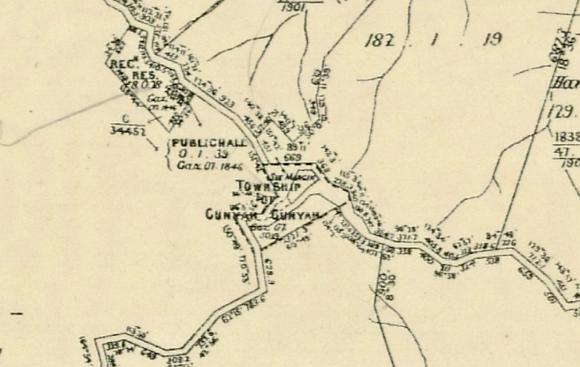
One settlement was Gunyah (sometime named Gunyah Gunyah).
During recent weeks, I received a history book detailing how one large family actually beat all the odds. At the end, this family remained stoic eventually making a significant impression throughout Morwell and Traralgon. Gunyah Gunyah was their launching pad; and credit is well overdue.
Briefly, our family (a real family, not invented by AI), started their journey to Australia in about 1856, arriving in Adelaide after a long trip from the Isle of Guernsey. Over the next two or three years, members of our family located to Victoria; some settling in north-east Victoria at Youanmite, near Shepparton. An unviable farm, droughts and poor commodity prices soon had this family relocate to Kilmore. Soon, Dumbalk beckoned, mainly with stories of better dairy prices being earned from farming in South Gippsland.
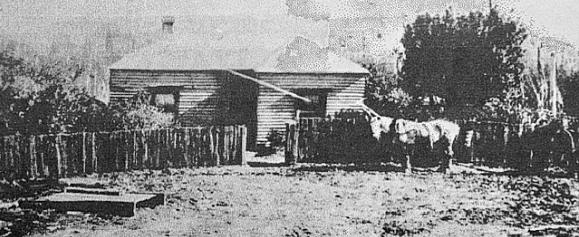
Grand stories of Crown lands being opened in and around Gunyah were enticing. A move was made to farm a selection of 160 acres; and, in hindsight, a daunting and awesome sight.
To write about Gunyah requires time and energy and commitment. Such a pity now that memories have disappeared. Years ago, my father cut timber there when he was young; his stories have remained.
Gunyah once boasted a township, complete with hotel, school, houses, rifle club, bush nursing hospital, post office, basically all this kept the community satisfied. Nonetheless, promises of a railway line from Yinnar, better roads, a fully equipped bush nursing hospital and hope for less severe winters, total satisfaction was not delivered.
Take a drive along the Grand Ridge Road, perhaps in spring. Savour the bush, tall plantation eucalypt timber (and soft-centred) pines. But remember Gunyah was once a thriving township with a community of optimists.
In closing you will note a press release about a “Hot Rod Scramble” (from the Morwell Advertiser, Thursday July 2, 1959.) Since the July 2026 Churchill News edition, comments back to me have doubted the authenticity of such an event. (Read original article, with news paper clipping) Feedback is valuable, if it’s accurate.